
We have a tendency to remember what happens at the beginnings and the ends of things and largely to forget the rest. So while I am sure I have forgotten most of what I studied in rabbinical school, I do remember what happened the very first weekend.
In classic school year fashion, this coincided with the lead-up to the high holy days. Because the rabbinical school I went to was strong on social intelligence and community culture, our opening session was a weekend retreat at a summer camp facility. There, my teacher Rabbi Art Green, founder and then rector of the school, told a story about a debate he had had with another prominent contemporary Jewish theologian, Rabbi Lawrence Kushner.
Rabbi Green had opined that Jews fall into two categories: while only a minority show up week in week out for regular community gatherings, Torah study and synagogue attendance, a much larger number still practice as Jews when it comes to “life cycle” observance. They may not be actively affiliated as synagogue members, but they want their hatches, matches and dispatches, as my grandma used to say, to take place under Jewish conditions.
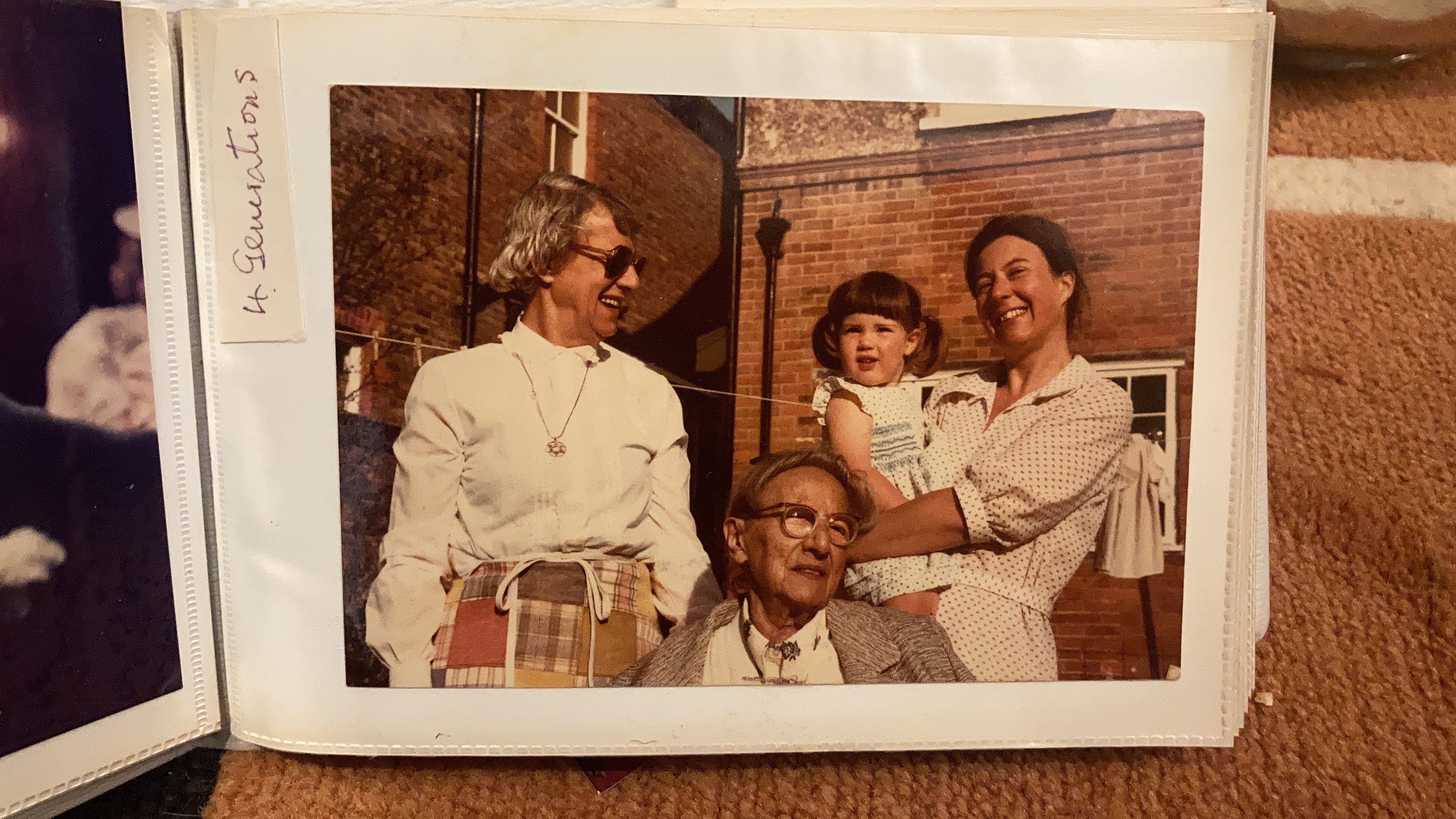
The aforementioned grandma (left), with her mother (front), her daughter (right) and granddaughter (me, a babe in arms). All the implied hatches, matches and dispatches were indeed rabbinically approved.
Rabbi Kushner disagreed with this demarcation, arguing that although many Jews are not regular synagogue attendees, they do tend to show up on occasion — specifically on the occasions of Rosh Hashanah, Jewish New Year, and/or Yom Kippur, Day of Atonement.
“On the contrary, you prove my point,” said Rabbi Green. “Those are precisely the people I am talking about in my second category. Because, you see, Rosh Hashanah and Yom Kippur are life cycle events.”


I have thought about this observation a good deal over the years, and about why so many people do indeed feel called to formal congregational practice on these holidays but no others. After all, Passover and Shabbat are more central to Jewish theology and mythos; Hanukkah is more popular, and Purim is more fun — but none of the above prompts the same public attendance.
These holidays, particularly the one we are about to celebrate this weekend, may not have been so serious in their original biblical context. But at least in how they have been developed by rabbinic Judaism, Rosh Hashanah and Yom Kippur carry stark life cycle themes. So I’m inclined to agree with my teacher Rabbi Green: these holidays command attention precisely because they bring us face-to-face with our mortality.
This is why they are known as Yamim Nora’im, Awe-filled Days, Days of Awe. With such high stakes they are unnerving to ignore.
Yom Kippur’s connection to mortality is pretty explicit. On this day we not only refrain from life-giving activities such as food and sex and wear clothes reminiscent of burial shrouds; we also commit ourselves to the practice of confession, viddui, a ceremony otherwise reserved primarily for the deathbed. Yom Kippur is a moment when we deliberately pass ourselves through an approximation of death, emerging cleansed and if not reborn, then at least renewed.
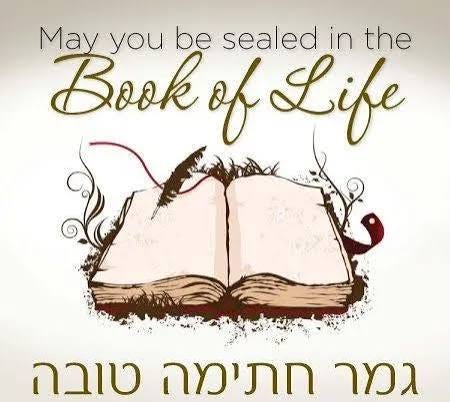
Gmar Chatimah Tovah, the traditional Yom Kippur greeting printed at the bottom of this image, basically means “May your final sentencing be favorable.”
This rite of passage properly begins 10 days earlier, on Rosh Hashanah, which the rabbis termed Yom HaDin, the Day of Judgment. Judgment Day was a term the prophets and early sages used to refer to a one-time eschatological event, but the Talmud applied the concept to something we encounter annually: a time when we speak of the books of life and death being opened, our unwritten future in the balance. The liturgy focuses, too, on our frailty, comparing human life to grass that withers and clay that breaks, and contrasting the presence of an eternal, immortal force with our own limited existence. By reminding ourselves that life is short — whether or not we believe a true judge knows and watches all — we are prompted to evaluate and, hopefully, improve how we spend our brief time on earth.
The ancient, primal wail of the shofar is literally an alarm, a reminder to wake up and focus. It is a trumpeting of God’s sovereign presence, a mustering of the legions of light. The Torah tells us the shofar rang out at breakthrough moments in the past (at Sinai and the start of the jubilee years), and the prophets aver that this sound will announce the end of days.
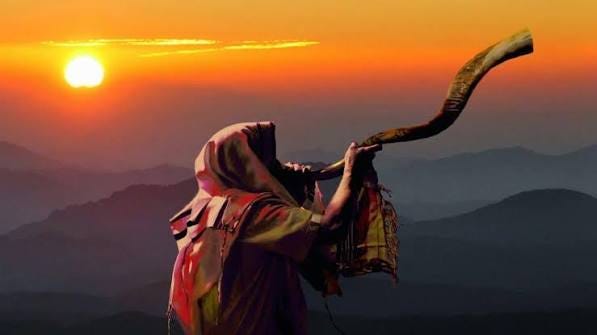
A surprising paucity of “shofar end of days” representations available via google image search. This isn’t the end of days, just the end of a day. Nice shot though.
Echoing through the ages, the cosmic cry of the shofar also connects us to the great theme of Rosh Hashanah’s Torah and prophetic readings: the struggle to have children that survive us. At the climax of the second day’s Torah portion, the binding of Isaac, a ram caught by his horns is ultimately sacrificed instead of Sarah and Abraham’s son; our sounding of the ram’s horn now is intended to remind both God and us of this story. According to rabbinic legend, the sound of the shofar reminds us too of Sarah’s screams as she hears of her husband’s intentions. Other mothers yearning, afraid for or mourning their children permeate Rosh Hashanah’s scriptural readings, from Hannah’s pleading for a pregnancy, to Hagar’s child facing death in the wilderness, to Jeremiah’s account of Rachel weeping for the children she has lost.
While on Rosh Hashanah this focus on mortality is framed through the heartbreaking struggles of individuals and families, on Yom Kippur the confrontation with death is collective. Here, we hone in on the image of the high priest. In ancient times, this man was required to enter the most holy shrine to pray for Israel’s expiation — a direct encounter with the god-field that was known to be likely fatal. Perhaps reiterating this theme, the dangers of representing the Jewish people, on Yom Kippur afternoon, many Jewish communities read Eleh Azkarah (“These I Will Remember”), a grisly martyrology detailing the Roman torture and execution of several major rabbis.
Whether we try to appease death through propitiation, as in Yom Kippur’s ancient scapegoat ritual and other offerings, through prayer and good deeds, or through invoking the deaths of the righteous, the overtones of mortality permeate these days of awe. Also known as Yom HaZikaron, or a day of remembrance, Rosh Hashanah’s liturgy is focused on asking God to remember and keep the promises made to our ancestors. But these are also times when many of us remember our own more immediate forebears, with yizkor, the memorial prayer, said on Yom Kippur and yahrtzeit candles lit for both holidays. For the entire month leading up to the High Holidays, it is traditional to visit the cemeteries where our dead are buried.
Indeed, one of my most cherished Rosh Hashanah experiences occurred in a graveyard. Some years ago I went on Rosh Hashanah to pray at the tomb of another of my teachers, Rabbi Zalman Schachter-Shalomi. While there, a family arrived and proceeded to make a picnic nearby at the graves of their matriarch and patriarch. I had noticed these graves before because they have unusually humorous headstones (you don’t often see “I had a hat when I came in!” etched in marble) and the living descendants did not disappoint. Four generations gathered there that day, the youngest only a few months old. Their annual picnic was not only a way to keep the family together, to eat and celebrate the new year, but also to actively remember the beloved dead, reading letters and postcards that the ones buried there had sent their descendants during their lifetimes.
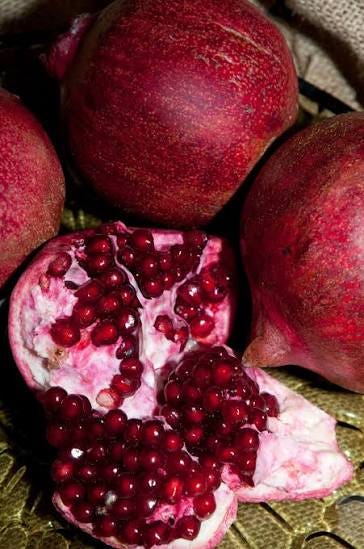
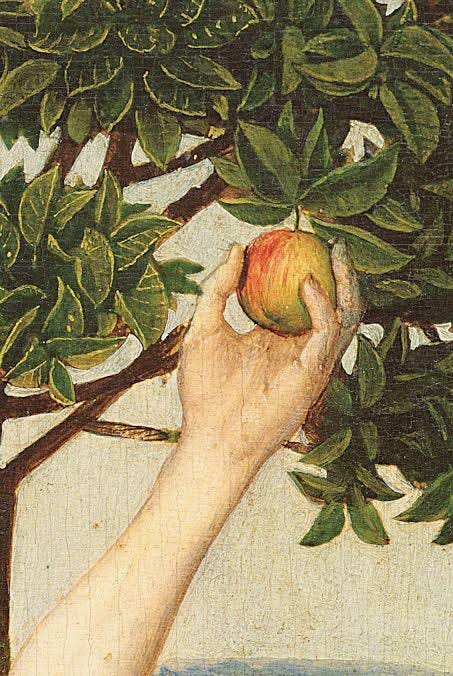
For much as these days do speak often of death, they are also fixated on life and its continuation. The most classic of Rosh Hashanah foods after apples dipped in honey is pomegranate, its abundance of seeds and red juices a messy and delicious symbol of life. An ancient Talmudic debate actually concludes that Rosh Hashanah celebrates not the first day of creation and the beginning of light, but rather the sixth day of creation and all that happened thereon. In the rabbinic mind, this is not just the birthday of humanity, but also the day on which the original humans made some momentous decisions involving eating fruit, gaining perspective and contemplating death. The identification of this fruit with the apple came later, with the Latin translation of the Bible, but in any case I do think it’s a wonderfully ballsy move — albeit an unconscious one for a lot of us — to celebrate this anniversary with some more celebratory fruit feasting. To life! To choice! To becoming like divine beings, knowing good and evil!
That the days’ scriptural readings emphasise mothers and children has already been mentioned, with Hagar, Sarah and Hannah each taking a turn in the spotlight. More subtle but no less fascinating is the prophetic reading for day two, from Jeremiah 31. Here the people as a whole are seen as Maiden Israel, with her hand-drums and circle dances. Pregnant women and mothers of young children also feature among the returning throng described later in the chapter, alongside much emphasis on fertility, building, vineyards (a classic setting for sex in the biblical mind) and abundance in general.


As for frame drums and circle dances being the purview of women in the ancient near east, see Layne Redmond’s splendid book When the Drummers Were Women. But this is more than just an image of women doing woman-y things; rather, I think the circle dance is meant here as an archetypal representation of the circle of life itself. The concern with procreation may also be the reason for the selection of Leviticus 18 as the afternoon Torah reading for Yom Kippur. It might seem strange to have one of the most sex-focused passages of the whole Torah read at such a time, but seen in the context of life and death perseverations, the delimiting of kosher sexual unions makes a lot of sense.
For life is the force that brings us round to celebration, while death gives it depth and meaning. The most universal of human experiences, death is precisely what helps us value the time we have on earth. And this, perhaps, is what makes the High Holiday message so compelling: we know we will die, and this knowledge, born, so they say, of eating sweet fruits with our loved ones, is exactly what enables us to choose life.
Shana tova - a happy and a sweet new year.
This was lovely and fun - thank you! L'Shana tova! ❤️